Are you Team Manga or Team Anime?
Take your passion everywhere with our exclusive collection of hoodies and T-shirts.
Manga and anime are two of Japan’s most renowned cultural exports, captivating audiences worldwide with their unique artistic styles and narrative techniques. The term “manga” specifically denotes Japanese-style graphic novels or book-length comic books, whereas “anime” encompasses Japanese-style 2D animated television shows and films. Essentially, manga is the print medium, and anime is the animated visual medium.
Although they often adapt the same stories and share thematic elements — think One Piece, Attack on Titan, Chainsaw Man or Demon Slayer, all born in manga before conquering television — several important distinctions set these two mediums apart. Rather than listing twenty overlapping differences, this guide groups them into ten clear themes, so you know exactly what changes when a story crosses from paper to screen.
1. Medium and format
The most basic distinction: manga is something you read, anime is something you watch and hear. Everything else flows from this.
- Manga: Japanese comic books or graphic novels, typically printed in black and white and serialized one chapter at a time in weekly, bi-weekly, or monthly magazines like Weekly Shōnen Jump. Chapters are later collected into tankōbon volumes. Read from right to left, mirroring traditional Japanese reading order — a habit that surprises Western readers on their first Naruto or Berserk volume, but becomes second nature within a chapter.
- Anime: Japanese animated TV series, films, and web series, watched on television, in theaters, or via streaming platforms like Crunchyroll and Netflix. Anime brings static panels to life with motion, color, voice acting, sound effects, and musical scores — the difference between reading a Jujutsu Kaisen fight scene and hearing Yuji Itadori shout mid-combat.
2. Production process and creative control
Manga is a workshop; anime is a factory. That single fact explains most of what follows.
- Manga: Typically the work of a single mangaka (manga artist) assisted by a small team for backgrounds, screentones, and inking. This lean setup gives the artist near-total control — what you read is a direct expression of one vision, from Berserk‘s Kentaro Miura to One Piece‘s Eiichiro Oda.
- Anime: A full industrial pipeline. Studios like MAPPA, Ufotable, or Wit assemble directors, storyboard artists, key animators, in-betweeners, sound engineers, voice actors, and composers. Creative control is dispersed, and adaptations regularly diverge from the source — ask any Tokyo Ghoul fan about the second season.
3. Storytelling: pace, character depth, and filler
Manga can breathe; anime works on a clock. This shapes everything from character arcs to filler episodes.
- Manga: Panels linger, inner monologues run long, and side characters get room to develop. Series like Vagabond or Vinland Saga devote entire chapters to what an anime would compress into two minutes. Rarely contains filler — most material is relevant to the main plot or character growth.
- Anime: Limited by ~23-minute episodes, forcing pacing decisions. Long-running shows like Naruto or Bleach insert filler episodes to avoid overtaking the manga. Newer productions like Ufotable’s Demon Slayer avoid it entirely, sticking close to the source. What anime loses in nuance it gains in voice performance and music.
4. Sensory and interactive experience
Reader-controlled versus studio-controlled — both experiences are rich, they’re just built differently.
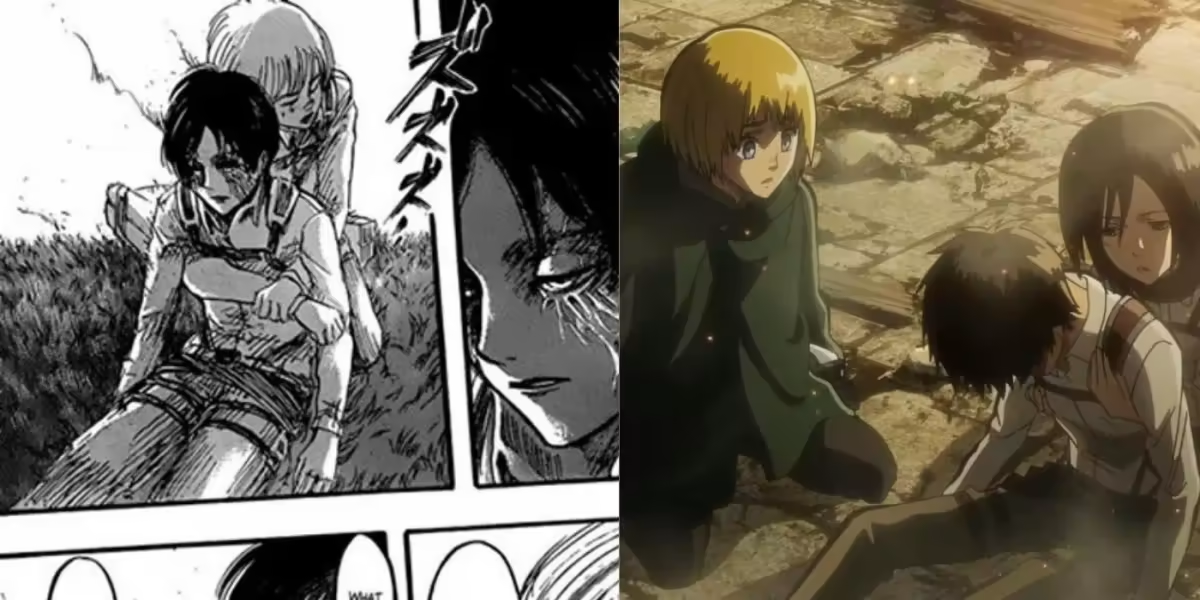
- Manga: An active, reader-controlled experience. You set the pace, re-read a panel, linger on a two-page spread. The imagination fills in the silence, color, and movement — precisely why Junji Ito‘s horror gets under your skin: because you are the one turning the page.
- Anime: A sensory ride you don’t control. In return, you get the roaring choruses of Attack on Titan‘s openings, the ambient sound design of Mushishi, and the voice acting that made Levi Ackerman iconic. Pacing is dictated by the episode’s runtime and sequence.
5. Release schedule and series longevity
Manga runs on the author’s schedule; anime runs on broadcast seasons. Completion is guaranteed for one, not the other.
- Manga: Chapters typically drop weekly or monthly, giving authors quick reader feedback and freedom to adjust arcs. Series can run for decades — One Piece started in 1997 and is still ongoing — and generally reach the conclusion the mangaka envisions.
- Anime: Aired in seasons (12 or 13 episodes per cour) during Winter, Spring, Summer, or Fall windows. Once locked, the schedule is fixed. Completion is never guaranteed — plenty of anime stop mid-story because of ratings or budgets, from the original Fullmetal Alchemist (later corrected by Brotherhood) to Berserk for years.
6. Content, censorship and cultural sensitivity
Print gives manga latitude; broadcasting standards constrain anime.
- Manga: Themes of violence, sexuality, mental health, or political critique are often handled with fewer restrictions. Authors like Naoki Urasawa, Inio Asano, or Junji Ito routinely take the format into uncomfortable, adult territory.
- Anime: Subject to TV and streaming standards that vary by country and platform. Scenes get toned down, redrawn, or cut — blood turned black, silhouettes replacing bodies, dialogue softened. The Devilman Crybaby and Chainsaw Man discussions online usually revolve around exactly that.
7. Cost, accessibility and economics
Cheap to produce versus capital-intensive — this shapes which stories even get made.
- Manga: A mangaka, a few assistants, ink and paper. That economic simplicity is why niche and experimental stories flourish — seinen, josei, yuri, gekiga, cooking manga, mahjong manga, entire subgenres survive because the risk is low. Digital apps and translated volumes make manga globally accessible at low cost.
- Anime: A single cour of a modern series can cost millions of dollars, pushing production committees toward safer bets: proven manga adaptations, popular light novels, established franchises. Streaming has widened access, but the economics still favor commercial certainty over creative risk.
8. Artistic detail and visual style
Manga rewards density; anime rewards motion. Different craft, different results.
- Manga: Can afford intricate artwork. A single Kentaro Miura page in Berserk, or Katsuhiro Otomo‘s cityscapes in Akira, contains detail no weekly anime schedule could sustain. Backgrounds are more elaborate, textures more worked, precisely because they only need to be drawn once.
- Anime: Compensates through motion, color, and light. Studios like Ufotable (Demon Slayer) and MAPPA (Jujutsu Kaisen) push sakuga — highly-animated action sequences — to jaw-dropping levels. But in long-running shows, simplification is inevitable to hit the weekly deadline.
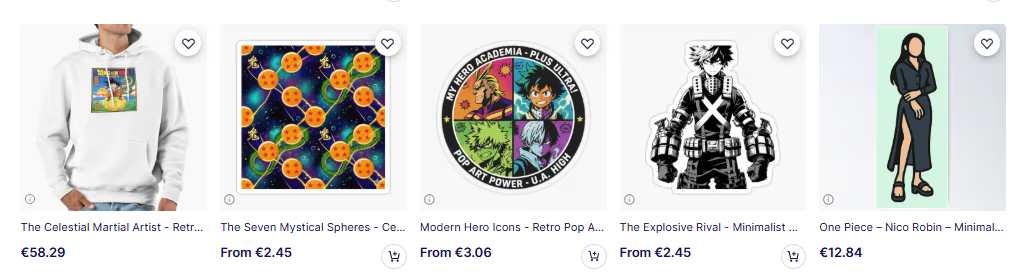
Straight from manga inspiration to original products.
9. Cultural impact and historical authenticity
Manga stays closer to home; anime is Japan’s biggest cultural ambassador.
- Manga: More likely to remain true to the author’s original cultural and historical settings. Japanese references, honorifics, food, seasonal rituals, small-town settings — all survive in the panels because there’s no dubbing or localization pressure to soften them. It fuels deep niche communities, from BL readers to historical seinen fans.
- Anime: Japan’s biggest soft-power ambassador. From Studio Ghibli‘s international runs to Netflix’s global anime pushes, it shapes how millions perceive Japanese culture. That reach comes with adaptation choices: names anglicized in dubs, cultural references explained or replaced, jokes reworked. Some fidelity is lost; a much larger audience is gained.
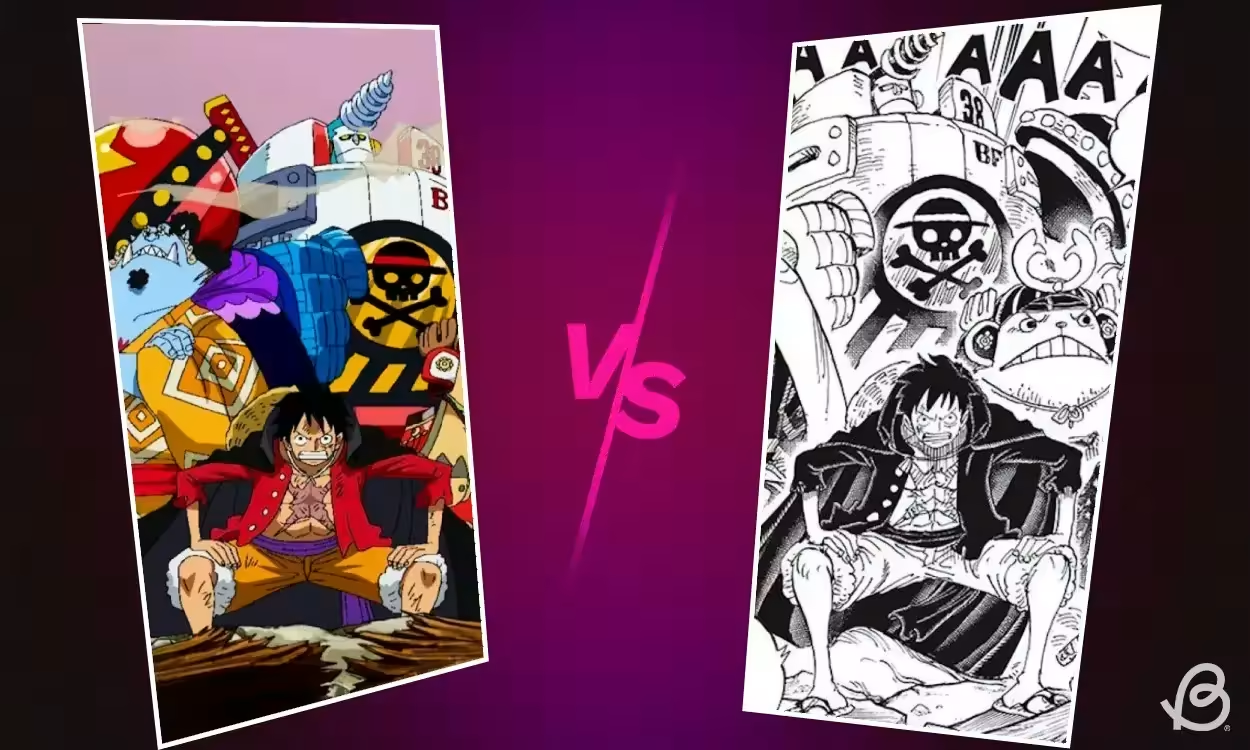
10. In summary — which medium is right for you?
Neither medium is objectively better; they answer different needs. It comes down to what you want out of the story.
- Choose manga when you want the full, uncut story at your own pace, with the author’s original vision intact — ideal for deep-dive fans, purists, and anyone who’s been burned by an adaptation that stopped mid-arc.
- Choose anime when you want the sensory ride: the music, the voice acting, the choreography of a full sakuga fight scene, and the shared moment of watching a season unfold week by week with the community.
- Do both, like most serious fans: watch the anime for the atmosphere, then dive into the manga for what came before, what got cut, and what happens next. Whichever entry point you choose, the story keeps expanding.
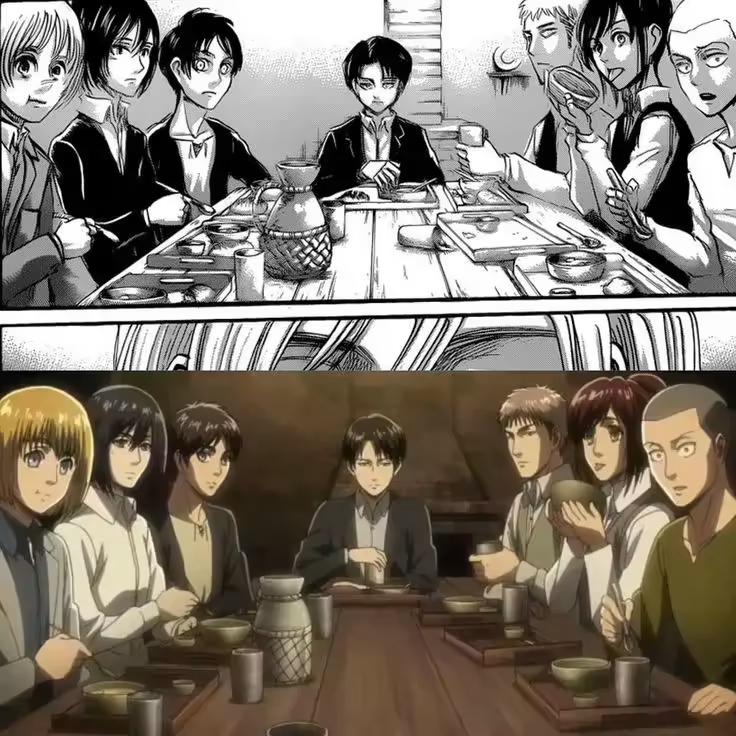
Template – Manga vs Anime – Comparisons and Differences
Table of Contents
Are you Team Manga or Team Anime?
Take your passion everywhere with our exclusive collection of hoodies and T-shirts.
Manga and anime are two of Japan’s most renowned cultural exports, captivating audiences worldwide with their unique artistic styles and narrative techniques. The term “manga” specifically denotes Japanese-style graphic novels or book-length comic books, whereas “anime” encompasses Japanese-style 2D animated television shows and films. Essentially, manga is the print medium, and anime is the animated visual medium.
Although they often adapt the same stories and share thematic elements — think One Piece, Attack on Titan, Chainsaw Man or Demon Slayer, all born in manga before conquering television — several important distinctions set these two mediums apart. Rather than listing twenty overlapping differences, this guide groups them into ten clear themes, so you know exactly what changes when a story crosses from paper to screen.
1. Medium and format
The most basic distinction: manga is something you read, anime is something you watch and hear. Everything else flows from this.
2. Production process and creative control
Manga is a workshop; anime is a factory. That single fact explains most of what follows.
3. Storytelling: pace, character depth, and filler
Manga can breathe; anime works on a clock. This shapes everything from character arcs to filler episodes.
4. Sensory and interactive experience
Reader-controlled versus studio-controlled — both experiences are rich, they’re just built differently.
5. Release schedule and series longevity
Manga runs on the author’s schedule; anime runs on broadcast seasons. Completion is guaranteed for one, not the other.
6. Content, censorship and cultural sensitivity
Print gives manga latitude; broadcasting standards constrain anime.
7. Cost, accessibility and economics
Cheap to produce versus capital-intensive — this shapes which stories even get made.
8. Artistic detail and visual style
Manga rewards density; anime rewards motion. Different craft, different results.
Straight from manga inspiration to original products.
9. Cultural impact and historical authenticity
Manga stays closer to home; anime is Japan’s biggest cultural ambassador.
10. In summary — which medium is right for you?
Neither medium is objectively better; they answer different needs. It comes down to what you want out of the story.